

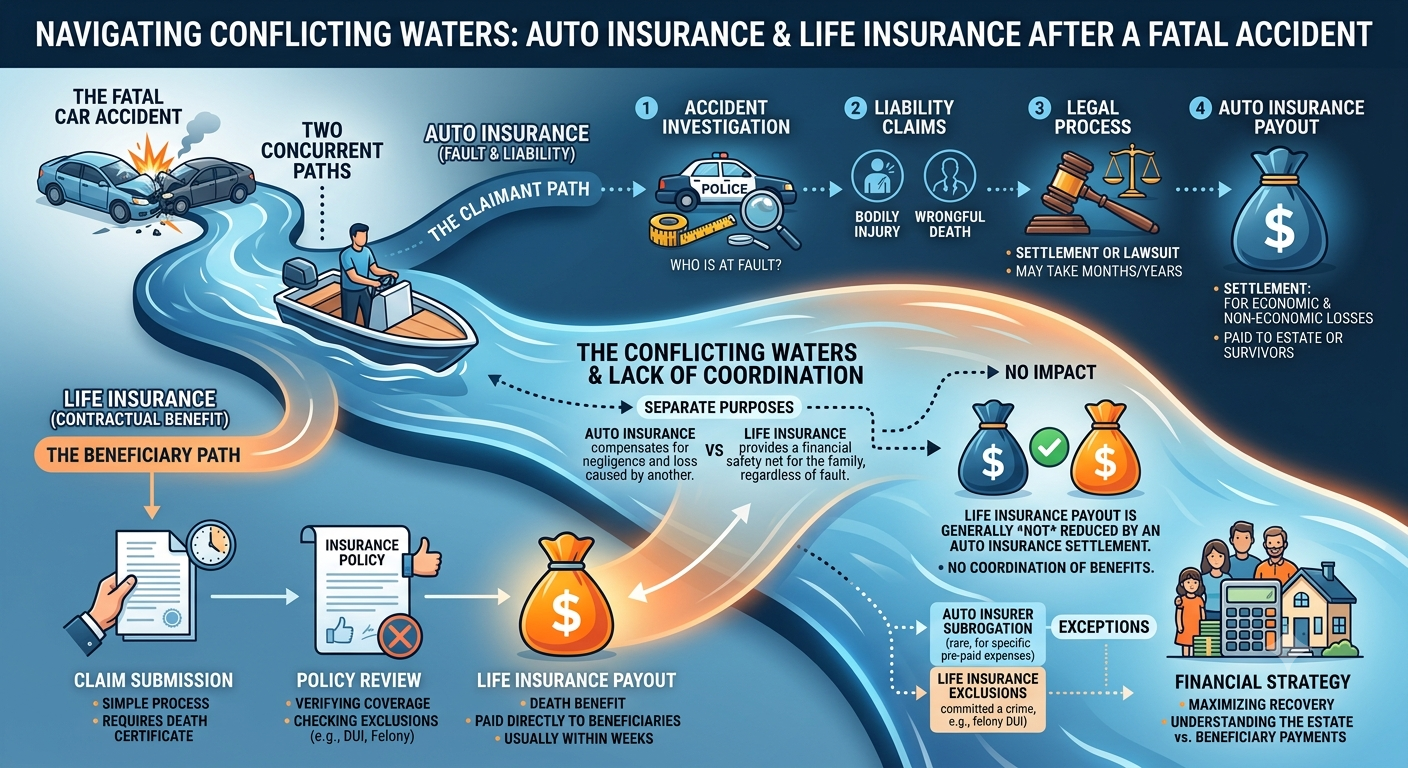
Tragedies can strike at any moment, and a fatal car accident is an unfortunate reality that no one wants to encounter. When such an incident occurs, it often leads to a complex web of legal, financial, and emotional challenges. Two critical aspects affected by such events are auto insurance and life insurance policies. In certain cases, these insurance policies can overlap or even conflict with each other, further complicating an already difficult situation. This article explores the potential conflicts that may arise between auto insurance and life insurance following a fatal car accident.
Table of Contents
Auto Insurance Coverage
Auto insurance primarily provides coverage for property damage and bodily injuries resulting from car accidents. The specific coverage and benefits vary depending on the policy and the insurance company. In the event of a fatal car accident, auto insurance can play a crucial role in compensating for property damage, medical expenses, and liability claims.
Life Insurance Coverage
On the other hand, life insurance policies are designed to provide financial protection to the insured’s beneficiaries in the event of their death. When the policyholder passes away, the designated beneficiaries receive a predetermined lump sum or regular payments, depending on the terms of the policy. The purpose of life insurance is to provide financial support to the deceased’s family, pay off debts, cover funeral expenses, or even secure the beneficiaries’ long-term financial stability.
Potential Conflicts
Despite their distinct purposes, auto insurance and life insurance can sometimes come into conflict following a fatal car accident. Here are a few scenarios that may lead to conflicts:
Double Indemnity Clauses: Some life insurance policies contain double indemnity clauses, which specify that the death benefit is doubled if the policyholder dies in an accident. In such cases, the auto insurance company may question whether the accident was truly accidental or if there was intentional wrongdoing, potentially leading to disputes over coverage.
Negligence and Liability Claims: Auto insurance policies often provide liability coverage to compensate others for injuries or damages caused by the policyholder’s negligence. If the deceased policyholder was at fault in the fatal accident, the auto insurance company might have a right to subrogate or seek reimbursement from the life insurance payout to cover the liability claim.
Policy Exclusions: Both auto and life insurance policies have exclusions and limitations that define when coverage is applicable. If the terms of the life insurance policy contain specific exclusions related to car accidents, it could result in reduced or denied benefits, leaving the beneficiaries in a difficult financial situation.
Policy Ownership and Beneficiary Designation: In some cases, the owner of the auto insurance policy may not be the same person as the life insurance policyholder. Additionally, the designated beneficiaries in the life insurance policy might differ from those in the auto insurance policy. These discrepancies can lead to disputes regarding who should receive the insurance payouts.


